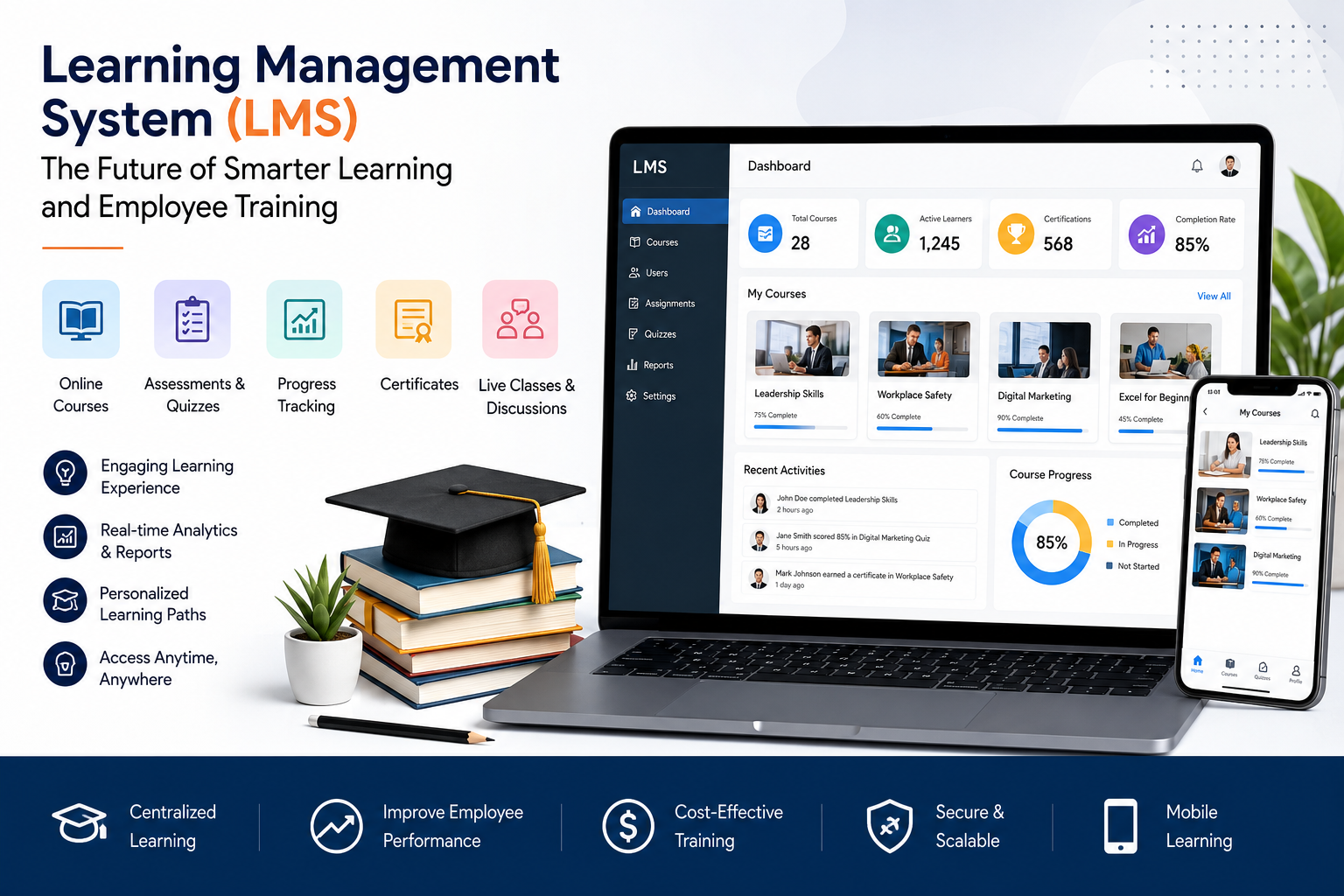
Learning Management System (LMS): The Future of Smarter Learning and Employee Training
In today’s digital-first world, learning is no longer confined to classrooms or lengthy training sessions. Businesses need employees who can quickly adapt to new technologies, educational institutions need flexible ways to deliver courses, and organizations require efficient methods to train customers, partners, and teams. Traditional training methods often struggle to meet these evolving demands, leading to inconsistent learning experiences and higher costs.
This is where a Learning Management System (LMS) becomes a game-changer.
A Learning Management System provides a centralized platform to create, manage, deliver, and monitor training programs. Whether you’re onboarding new employees, upskilling your workforce, delivering academic courses, or offering professional certifications, an LMS simplifies the entire learning process while making it engaging and measurable.
At Tantrata, we develop scalable and customizable Learning Management Systems designed to help businesses and educational organizations deliver high-quality learning experiences while improving efficiency and reducing training costs.
What is a Learning Management System?
A Learning Management System (LMS) is a software application that enables organizations to manage every aspect of digital learning. It allows administrators to upload courses, assign learning paths, conduct assessments, monitor learner progress, and generate performance reports—all from a single platform.
Instead of relying on physical classrooms, printed manuals, or scattered resources, learners can access training materials anytime and from anywhere using desktops, tablets, or smartphones.
An LMS not only saves time but also ensures consistent learning experiences for every learner, regardless of location.
Why Businesses Are Investing in LMS Software
Employee skills need continuous improvement to keep pace with changing technologies and market demands. Without a structured learning system, organizations often face challenges such as:
Inconsistent employee onboarding
Difficulty tracking training completion
High instructor and travel costs
Outdated training materials
Limited visibility into learner performance
Low employee engagement
Compliance risks
A Learning Management System addresses these issues by providing an organized, scalable, and data-driven approach to learning.
Key Features of Tantrata’s Learning Management System
- Easy Course Creation and Management
Administrators can create structured courses using videos, PDFs, presentations, quizzes, assignments, and downloadable resources. Course content can be updated instantly, ensuring learners always have access to the latest information.
- Personalized Learning Paths
Every learner has unique goals and responsibilities. Tantrata’s LMS allows organizations to create customized learning paths based on departments, job roles, skill levels, or certifications, ensuring employees receive relevant training.
- Interactive Learning Experience
Learning becomes more engaging through:
HD video lessons
Interactive quizzes
Practical assignments
Discussion forums
Live virtual classrooms
Progress tracking
Gamification with badges and achievements
Interactive content improves knowledge retention and course completion rates.
- Online Assessments and Certifications
The LMS includes built-in assessment tools for quizzes, exams, and assignments. Automated grading saves time, while digital certificates are issued instantly upon successful course completion.
- Real-Time Progress Tracking
Managers and instructors gain complete visibility into learner performance with dashboards that display:
Course completion status
Quiz scores
Attendance
Time spent learning
Assignment submissions
Skill development
This enables organizations to identify learning gaps and provide timely support.
- Mobile Learning
Today’s workforce is increasingly mobile. Tantrata’s LMS is fully responsive, allowing learners to access courses from smartphones, tablets, or laptops, making learning convenient and flexible.
- Automated Notifications
Learners receive reminders for upcoming classes, assignment deadlines, assessments, and certification renewals, helping improve participation and reduce missed deadlines.
- Comprehensive Reporting and Analytics
Detailed analytics provide valuable insights into learner engagement, course effectiveness, and overall training performance. These reports help organizations make informed decisions and continuously improve their learning programs.
Benefits of a Learning Management System
Faster Employee Onboarding
New hires can complete structured onboarding programs online, reducing training time and helping them become productive more quickly.
Cost-Effective Training
An LMS eliminates expenses associated with travel, printed materials, classroom rentals, and repetitive instructor-led sessions.
Consistent Learning Experience
Every learner receives the same standardized content, ensuring consistency across departments and locations.
Improved Employee Performance
Continuous learning helps employees enhance their skills, leading to increased productivity, confidence, and job satisfaction.
Better Compliance Management
Organizations can track mandatory compliance training, ensuring employees complete required courses on time and reducing regulatory risks.
Scalable Learning
Whether training 50 employees or 50,000, an LMS grows effortlessly with your organization.
Industries That Benefit from LMS Software
A Learning Management System is suitable for various industries, including:
Corporate Organizations
Employee onboarding
Leadership development
Compliance training
Sales enablement
Product knowledge
Educational Institutions
Schools
Colleges
Universities
Coaching institutes
Online academies
Healthcare
Medical certifications
Clinical training
Safety compliance
Manufacturing
Equipment operation
Workplace safety
Standard operating procedures
Retail
Customer service
Product training
Sales techniques
IT and Software Companies
Technical certifications
Cybersecurity awareness
Software training
Why Choose Tantrata’s Learning Management System?
At Tantrata, we understand that every organization has unique learning needs. Our Learning Management System is designed to be flexible, secure, and scalable, allowing businesses to create engaging learning experiences tailored to their objectives.
Our LMS Offers:
User-friendly interface
Cloud-based deployment
Mobile compatibility
Role-based access control
Secure data management
Custom branding
Integration with HRMS, CRM, and ERP systems
AI-ready architecture
Real-time analytics
Dedicated technical support
Whether you’re training employees, educating students, or certifying partners, Tantrata’s LMS provides the tools needed to deliver effective learning experiences.
The Future of Learning Management Systems
Technology is reshaping how people learn. Modern LMS platforms are increasingly integrating advanced technologies to enhance user experiences and learning outcomes.
Emerging trends include:
Artificial Intelligence (AI) for personalized learning recommendations
Microlearning for bite-sized content
Gamification to boost engagement
Virtual and augmented reality training
Social learning communities
Predictive analytics for skill development
Mobile-first learning experiences
Adaptive assessments
AI-powered chatbots for learner support
Organizations adopting these innovations can create more engaging, efficient, and impactful learning environments.
Conclusion
A Learning Management System is more than just an online training platform—it’s a strategic investment in your organization’s future. By centralizing learning, automating administrative tasks, and providing valuable insights into learner performance, an LMS helps businesses and educational institutions improve productivity, reduce costs, and foster continuous growth.
If you’re looking to modernize your training programs, streamline employee onboarding, or deliver engaging educational experiences, Tantrata’s Learning Management System is the ideal solution. Our customizable, scalable, and secure LMS empowers organizations to build a culture of continuous learning and achieve long-term success.




Leave a Reply